Why Choose Polycarbonate Panels for Your Project?
Choosing the right roofing or wall material affects comfort, safety, maintenance, and long-term project value. Polycarbonate panels deserve attention because they combine low weight with notable impact resistance. They can bring daylight into greenhouses, workshops, covered walkways, and commercial spaces without relying entirely on glass. That practical balance often simplifies handling and reduces structural demands.
In field applications, installers value panels that are easier to cut, drill, and transport. A clear roof can soften harsh shadows across a workbench, while a bronze finish can reduce glare inside a sunroom. Multiwall designs may also improve thermal performance through trapped air layers. However, performance depends on panel thickness, surface coatings, framing, ventilation, and correct installation. The material is not perfect.
Details matter.
Manufacturer specifications should guide decisions about load capacity, fire performance, UV protection, and temperature movement. Engineers and local building officials may also require project-specific calculations. Poorly spaced fasteners can cause stress around holes, while missing expansion allowances may create warping or noise. These problems are avoidable, but they are frequently underestimated.
A reliable choice begins with the project environment, not a product label. Consider sunlight exposure, snow or wind loads, cleaning access, and expected service life. Compare warranty terms carefully, because not every coating offers the same protection. Polycarbonate panels can provide an efficient, durable solution, yet thoughtful design remains essential. The strongest result comes from combining proven material data with careful site judgment and realistic expectations.
What Are Polycarbonate Panels?
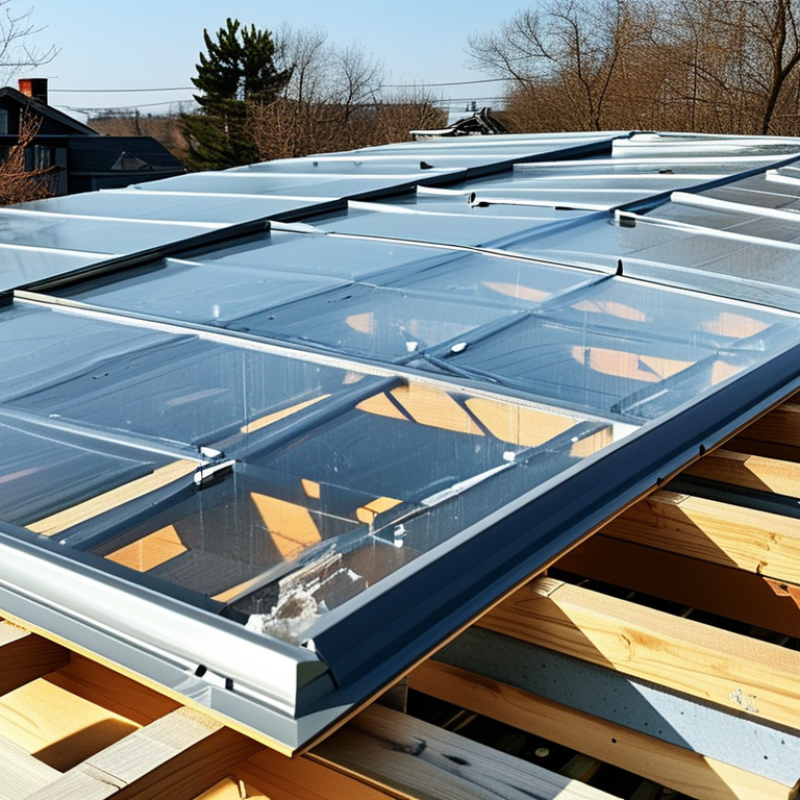
Polycarbonate panels are lightweight thermoplastic sheets used where daylight, impact resistance, and lower structural weight matter. They are not glass, although clear versions can look remarkably similar. Manufacturers form them into solid, twin-wall, or multiwall sheets. Solid panels provide a smooth, glass-like surface. Multiwall panels contain internal ribs that trap air and improve insulation. This structure also reduces weight. Small detail, big effect.
On a building site, workers can cut and handle these panels more easily than many glass products. Their high impact resistance suits workshops, covered walkways, greenhouses, partitions, and protective screens. Clear panels can spread natural light across a room, reducing harsh shadows. However, calling polycarbonate unbreakable is a mistake. Strong impacts, poor support, or incorrect drilling can still cause damage. Always check technical data for thickness, light transmission, fire performance, and load capacity.
A careful specification considers the local climate and the panel’s exact location. Roof panels need suitable slope, sealing, and support spacing. Installers must allow for thermal expansion, because the sheet moves during hot and cold cycles. Otherwise, fasteners may loosen or the edges may crack. UV protection is another practical concern. Without a protective surface layer, prolonged sunlight can reduce clarity and strength. Polycarbonate also scratches more easily than glass, so abrasive cleaning tools should be avoided. Choosing the cheapest sheet can create an expensive repair later.
Why Choose Polycarbonate Panels for Your Project? - What Are Polycarbonate Panels?
| Performance Dimension | Solid Polycarbonate Panels | Multiwall Polycarbonate Panels | Corrugated Polycarbonate Panels | Project Consideration |
|---|---|---|---|---|
| Typical structure | Single, flat sheet with a solid cross-section | Two or more sheets joined by internal ribs or webs | Profiled sheet with repeating ribs or waves | Choose the structure according to required impact resistance, insulation, appearance, and installation method. |
| Typical thickness range | Approximately 1.5–12 mm for common architectural and protective uses | Approximately 4–25 mm for common glazing and roofing uses | Approximately 0.8–2.0 mm for many lightweight roofing applications | The required thickness depends on span, wind or snow load, support spacing, and local building requirements. |
| Density | Approximately 1.20 g/cm³ | Uses the same base polymer, but the hollow construction reduces weight per square metre | Uses the same base polymer, with low sheet weight because of the thin profiled design | Low weight can simplify handling and reduce structural demand, but panel fixing must still be engineered correctly. |
| Approximate sheet weight | About 7.2 kg/m² at 6 mm thickness | About 1.7 kg/m² at 10 mm thickness; actual weight varies by design | Often about 1.0–2.0 kg/m²; actual weight varies by profile and thickness | Multiwall and corrugated formats are useful where lightweight installation is a priority. |
| Light transmission | Clear sheets commonly transmit approximately 80–90% of visible light | Common clear configurations transmit approximately 60–85%, depending on thickness and internal geometry | Clear profiles can provide high daylight transmission, but ribs create more visual diffusion | Tinted, opal, embossed, and structured finishes can reduce glare and solar heat while maintaining daylight. |
| Thermal insulation | Limited insulation; thermal conductivity is commonly around 0.20–0.23 W/m·K | Better insulation because trapped air reduces heat transfer; U-value depends strongly on thickness and design | Generally lower insulation than multiwall sheets because the profile contains fewer enclosed air layers | Use multiwall panels for greenhouses, daylighting, and enclosures where energy performance matters. |
| Impact resistance | Very high impact resistance compared with many conventional glazing materials | High impact resistance, although the ribs and edges must be protected during handling | Good resistance for lightweight roofing, but the thinner profile is more vulnerable to concentrated impact | Polycarbonate is suitable for areas exposed to hail, accidental impact, vandalism risk, or demanding handling conditions. |
| Operating temperature | Many standard grades are suitable for approximately −40°C to 120°C; grade limits vary | Many standard grades are suitable for approximately −40°C to 120°C; installation details affect performance | Temperature capability depends on resin, profile, and fixing system | Always confirm the manufacturer’s technical datasheet when panels will face extreme heat, cold, or thermal cycling. |
| UV protection | Outdoor sheets commonly use a UV-protective co-extruded layer on one or both sides | Outdoor sheets commonly use a UV-protective layer on the weather-facing side | Many outdoor profiles include UV protection on the exposed side | Install the protected face outward and seal open multiwall edges to help prevent dust and moisture entering the channels. |
| Thermal expansion | Relatively high; linear expansion is commonly about 0.065 mm/m·°C | Requires allowance for movement, especially across long panel lengths | Requires correctly sized fastener holes and overlaps to accommodate movement | Use manufacturer-recommended clearances, profiles, washers, and fixing details to prevent buckling or stress cracking. |
| Fabrication and installation | Can generally be cut, drilled, and formed with suitable tools and techniques | Can be cut with fine-tooth tools; channels should remain clean and properly sealed | Fast installation with overlapping sheets and profile-matched fixings | Installation quality is critical: incorrect drilling, over-tightening, or unsupported spans can reduce service life. |
| Common applications | Machine guards, security glazing, partitions, barriers, interior screens, and transparent protective covers | Greenhouses, skylights, roof glazing, façades, canopies, and lightweight thermal enclosures | Patio covers, agricultural roofs, shelters, carports, and translucent wall or roof cladding | Select the panel format that best matches structural loading, desired appearance, insulation needs, and maintenance access. |
| Key advantages | High clarity, strong impact resistance, and a flat architectural appearance | Low weight, improved insulation, and efficient daylight distribution | Low weight, simple installation, and economical coverage for lightweight structures | Polycarbonate panels offer a practical balance of daylight, durability, weight, and design flexibility. |
| Important limitations | Can scratch more easily than glass and may require careful cleaning and handling | Internal channels need suitable edge protection; dirt or condensation can affect appearance if poorly sealed | Profile geometry can make cleaning and detailed sealing more difficult | Use non-abrasive cleaning methods and follow the panel supplier’s guidance for compatible sealants and chemicals. |
Values are typical industry ranges for general-purpose polycarbonate products. Actual performance varies by resin grade, panel geometry, thickness, color, UV treatment, support spacing, climate, and installation method. Structural design should follow applicable local codes and the selected product’s technical datasheet.
Related Posts
-

Top 7 Benefits of Using Opaque Polycarbonate in Modern Architectural Design
-
Top Solid Plastic Sheets Uses Benefits and Buying Guide
-
Top 10 Benefits of Using Clear Plastic Sheets for Your Projects?
-

The Ultimate Guide to Polycarbonate Multiwall Sheets Benefits and Uses
-
What is Transparent Polycarbonate and Its Benefits for Buyers?
-
How to Choose Transparent Polycarbonate for Your Projects?